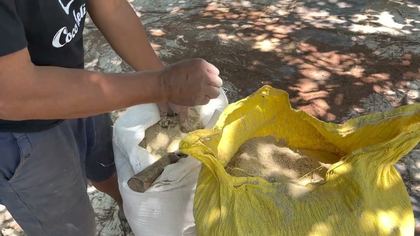
Everything added to the sawdust has a particular job. Once you know the job, you also know what happens when there is too much or too little.
4 lessons · 14 min
| Ingredient | Its job | When there is too much |
|---|---|---|
| Sawdust | The main food — cellulose and lignin, slowly dissolved. | — |
| Rice bran | Nitrogen and vitamins. This is what speeds up mycelial growth. | It is just as nourishing to mould and bacteria. Too much = a batch that spoils more easily. |
| Molasses or sugar | Quick energy for the first few days, while the mycelium cannot yet dissolve the wood. | It becomes bait for bacteria. A sour smell is the result. |
| Lime / agricultural lime | Raises the pH. This is the silent guard over the whole process. | Too alkaline — and the mushroom slows down as well. |
| Water | The mycelium needs moisture in order to travel through the substrate. | The substrate drowns; air is driven out; bacteria take over. |
This is the part most often misunderstood. Lime is not food — it is a defence.
Most of the moulds that are your enemy — especially green Trichoderma — prefer an acidic environment. The oyster mushroom, by contrast, is content in a slightly alkaline one. When you add lime to the substrate, you tilt the game in the mushroom's favour before the fight even begins.
This is also why lime goes into the sorghum twice — once before soaking, once after cooking.
In the books this is called the carbon-to-nitrogen ratio. Sawdust is high in carbon and almost devoid of nitrogen. The bran is what supplies nitrogen.
Too little nitrogen and the mycelium is slow and the harvest small. Too much and your batch becomes perfect food for bacteria and mould. The right mix is a balance, not a maximum.
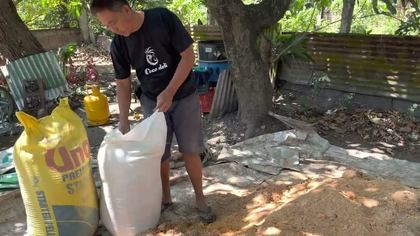
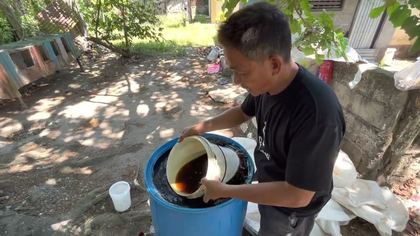
How many kilos of sawdust, how many grams of each ingredient, in one batch — and what D1 and D2 actually are, and what to substitute when they are out of stock.
The whole explanation as a PDF you can print and carry out to the farm — and the full course with it, for one payment.
One payment. No subscription.
 Mushy Deli