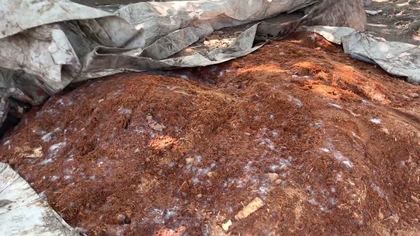
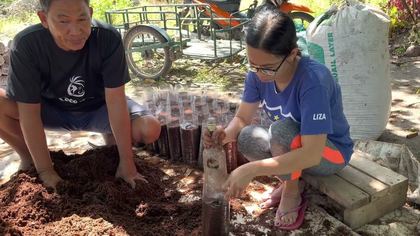
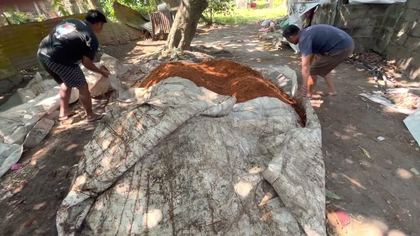
Three or four days, then twenty-one. It looks as though nothing is happening. In truth, a great deal is.
4 lessons · 14 min
After the pile is covered it heats up. That heat does not come from the sun — it comes from bacteria and microbes eating the easy nutrients. That heat is proof the process is working.
Two things are happening during this time. Those microbes are using up the ingredients that disappear fastest — the sugar and the most accessible part of the bran. The structure of the sawdust is also softening, so mycelium can move into it more easily later.
What you are reducing is the enemy's food, not the mushroom's. Cellulose and lignin — the oyster mushroom's real food — are beyond what those bacteria can digest.
The middle of the pile is hotter and starved of air. The edges are cool and dry. If you do not turn it, you end up with two different substrates inside one pile.
Turning brings the outside in and the inside out, and lets fresh air through the whole pile.
A healthy pile smells earthy, like fresh rain on a field. A sour smell, or one like ammonia, is a sign something is wrong — too wet, too compacted, or too much nitrogen.
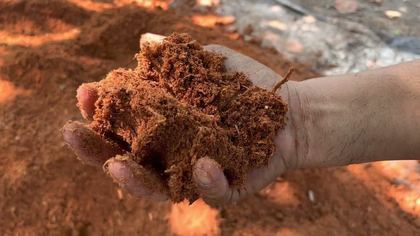
How long before bagging, and what look, smell or temperature says it is ready — or that it should be thrown out.
The whole explanation as a PDF you can print and carry out to the farm — and the full course with it, for one payment.
One payment. No subscription.
 Mushy Deli