This whole chapter has one aim: grain with exactly the right moisture — not dry, not burst — and clean.
10 lessons · 19 min
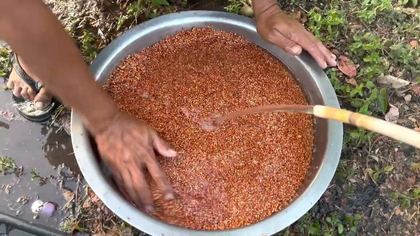 05-1 Washing the sorghumPaid2:28
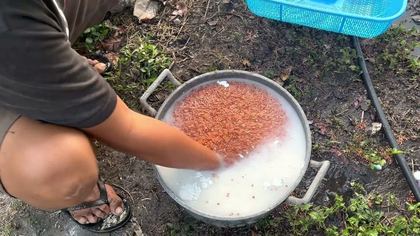 05-2 Adding lime to the washed sorghumPaid0:53
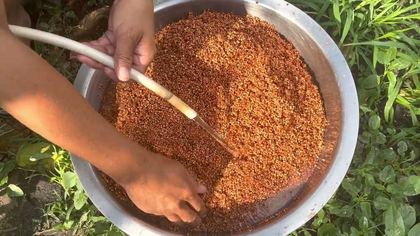 05-3 After the overnight soakPaid5:54
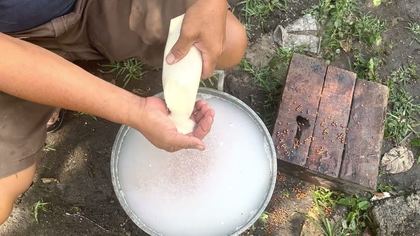 05-4 Adding the sugarPaid0:51
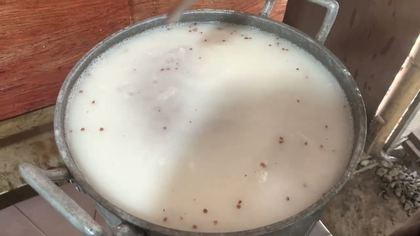 05-5 Mixing while the water is still coldPaid0:52
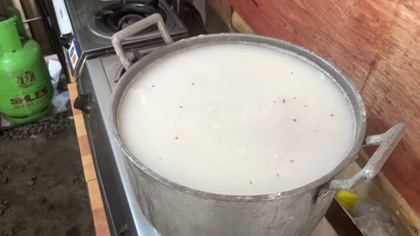 05-6 Heating and simmering the sorghumPaid0:38
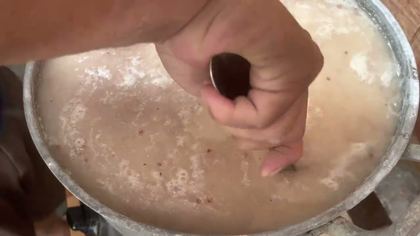 05-7 Stirring while it simmersPaid1:29
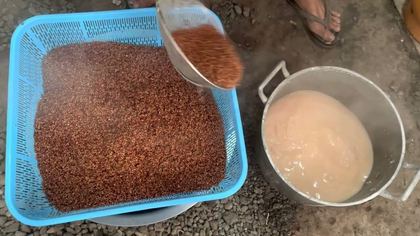 05-8 The simmered sorghum, and drainingPaid3:20
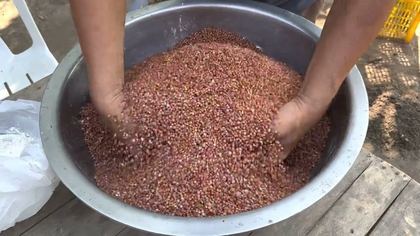 05-9 Lifting it out and adding agricultural limePaid2:36
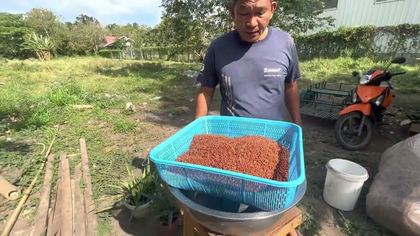 05-10 Drying in the sunPaid0:38
Unwashed grain carries dust, dirt, and starch on the outside. That starch glues the grains to each other as they cook, and grains stuck together become a lump that mycelium cannot get into.
Wash until the water runs clear. It is not a number of rinses — it is the look of the water.
Soaking draws water into the grain slowly and evenly. Cook dry grain straight away and the outside bursts before the inside is even wet.
This is the step most often ruined. A hard boil bursts the grain. A burst grain releases its starch, and that starch turns sticky — perfect food for bacteria.
What you want is grain that is soft but whole. Pressed between two fingers it should crush without turning sticky.
Take a few grains and split them with a fingernail. There should be no hard white centre — that is a sign of undercooking. But the skin should also not have split or burst open — that is a sign of overcooking.
After draining, the water on the outside of the grain has to go while the inside stays moist. A wet surface becomes a film of water, and bacteria swim in water — not on a dry surface.
The lime mixed in afterwards does two jobs: it raises the pH, and it coats each grain in a thin powder that stops them sticking together.
What sorghum costs and where it is bought; whether rice, corn or millet will do; and why the lime goes in twice.
The whole explanation as a PDF you can print and carry out to the farm — and the full course with it, for one payment.
One payment. No subscription.
 Mushy Deli