You are doing two different things in two different machines, and not knowing the difference is a common cause of failure.
16 lessons · 26 min
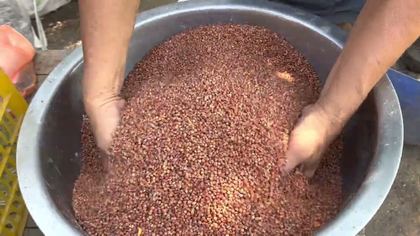 06-1 Mixing the dried sorghum with limePaid0:38
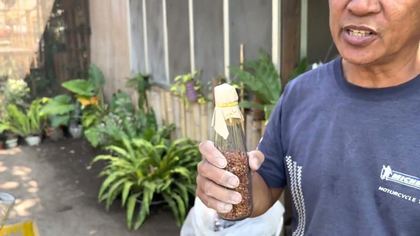 06-2 Bottling, step by stepPaid3:35
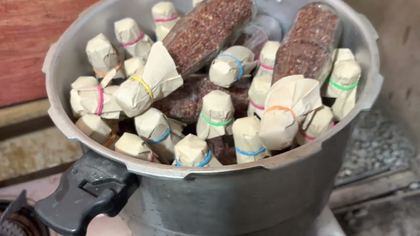 06-3 Preparing the pressure cookerPaid3:43
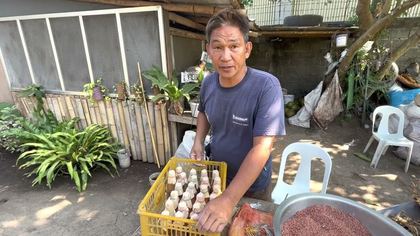 06-4 Getting ready to cook the bottled spawnPaid0:29
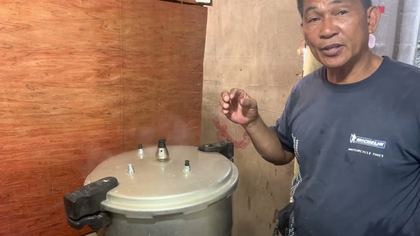 06-5 What happens while the spawn cooksPaid1:03
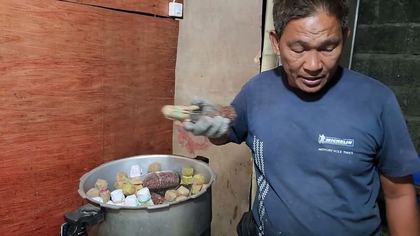 06-7 Removing the spawn bottlesPaid4:24
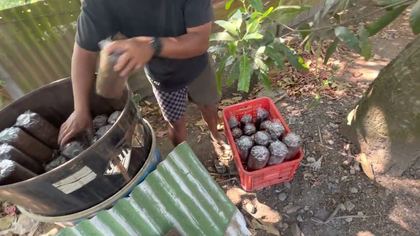 06-6 Taking the bottles out of the pressure cookerPaid1:26
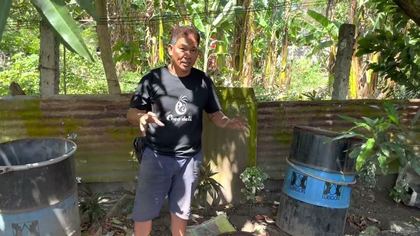 08-2 Setting up the cookerPaid1:09
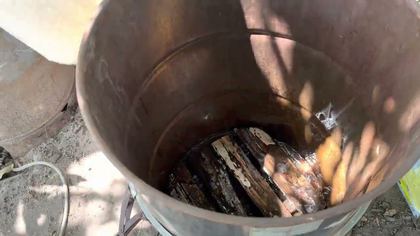 08-3 Putting water in the steel drumPaid0:40
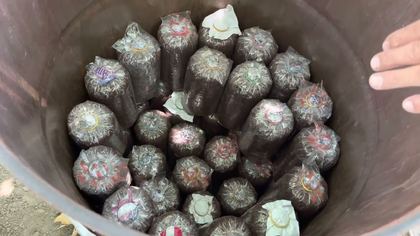 08-4 Loading fruiting bags into the drum — Part 1Paid1:46
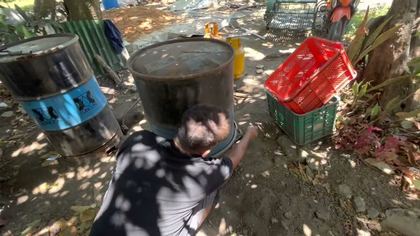 08-5 Loading fruiting bags into the drum — Part 2Paid1:16
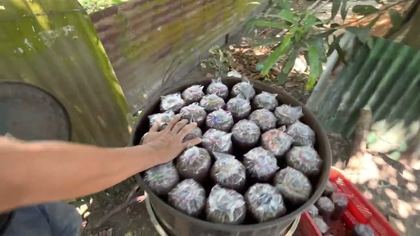 08-6 Sealing and locking the steel drumPaid2:01
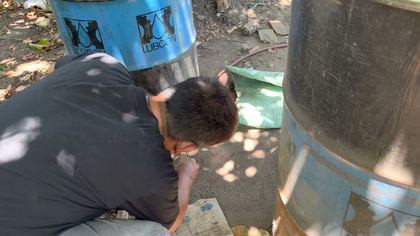 08-7 Lighting the firePaid1:44
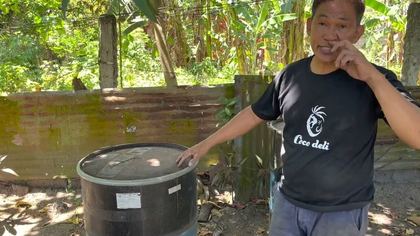 08-8 Why fruiting bags must be steamedPaid0:34
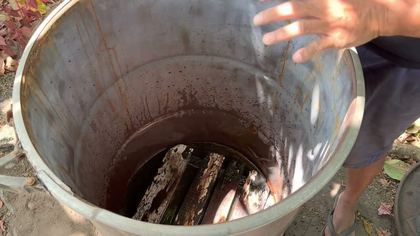 08-9 The temperature needed during cookingPaid0:33
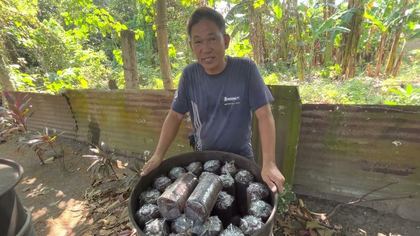 08-10 Taking the fruiting bags out after 8 hoursPaid1:24
| Sterilisation | Pasteurisation | |
|---|---|---|
| Machine | Pressure cooker | Steel drum with steam |
| Heat | Above 100°C, because of the pressure | About 100°C only — no hotter than boiling water |
| What dies | Almost everything, including tough spores | Most things, but not all |
| What it is for | The spawn bottles | The fruiting bags |
| Why that way | Spawn is defenceless and takes a long time to colonise | The number of bags and the cost of fuel make pressurising them all impossible |
Because the fruiting bag is never fully sterile, you are in a race. Some microbes survive inside. Your aim is for the mycelium to claim the substrate before they can recover.
That is why the amount of spawn you add matters, and why the bag must be sealed quickly.
If the water runs out before the time is up, the steam stops and the bottom scorches. Measure it before you start, not halfway through.
Do not stack too tightly. Steam is what carries the heat — if it cannot get through, there are cold spots in the middle of the stack.
A lid that leaks never reaches the right temperature, however long you cook. Check the seal before loading.
Not from lighting the fire. The count starts when the steam is steady.
Do not open it while hot. Air rushing in carries spores into hot, damp substrate — the finest environment they could ask for.
How many hours at what heat in the drum; what pressure in the cooker; how many bags per drum; how much fuel; and how long it takes to cool.
The whole explanation as a PDF you can print and carry out to the farm — and the full course with it, for one payment.
One payment. No subscription.
 Mushy Deli