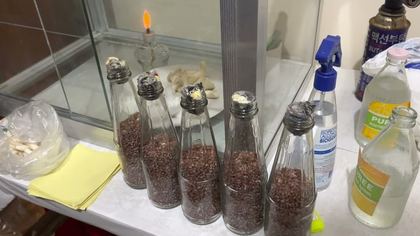
If you read only one chapter over and over, make it this one. This is where a whole batch lives or dies.
2 lessons · 22 min
The air around you right now carries thousands of mould and bacterial spores. You cannot see them and you cannot remove them. All you can do is reduce them and work fast.
Every second a bottle stands open is their opportunity. Every object that touches the mouth of the bottle can carry them in.
No fan, no open window, nobody walking past. Moving air carries spores. The best time is the early morning, when the air is still and cool.
The table, your hands, the outside of the bottle, the tools. Wipe with alcohol and let it dry — alcohol kills as it evaporates, not while it is still wet.
The spoon or wire used for transfer should be heated until it glows, and cooled before it touches the culture.
No hand, no sleeve, no tool should pass above an open bottle. Dust falls downwards.
The aim is the shortest time the bottle is open — not the fastest movement. A rushed hand knocks bottles over.
Saliva is full of bacteria and it travels further than you can see.
This is the cruellest part. The mistake you make today is not one you see today. You see it two or three weeks later, when green mould appears in the bottle.
So do not wait for a sign. Follow the rules even when nothing appears to be happening.
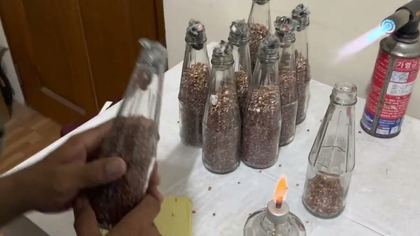
Still-air box or open table; which alcohol and at what strength; which tools; and the most common mistake at this step.
The whole explanation as a PDF you can print and carry out to the farm — and the full course with it, for one payment.
One payment. No subscription.
 Mushy Deli